
A Crisis in the Shadows
The decline in amphibian populations has been both well documented and well publicized. However, this attention is largely focused on frogs and toads. Little mention is given to salamanders or the threats that they face. This is unfortunate as the decline in salamander species is extremely significant.
Around half of all the world's salamander species are listed as Threatened by the International Union for Conservation of Nature (IUCN). This means all of these species are facing a high risk of extinction. A further 62 species have been designated as Near Threatened with populations that are dwindling. Sadly, for some salamanders it is already too late. Both the Yunnan Lake Newt (Cynops wolterstorffi) and Ainsworth's Salamander (Plethodon ainsworthi) have already gone extinct.
Habitat Destruction
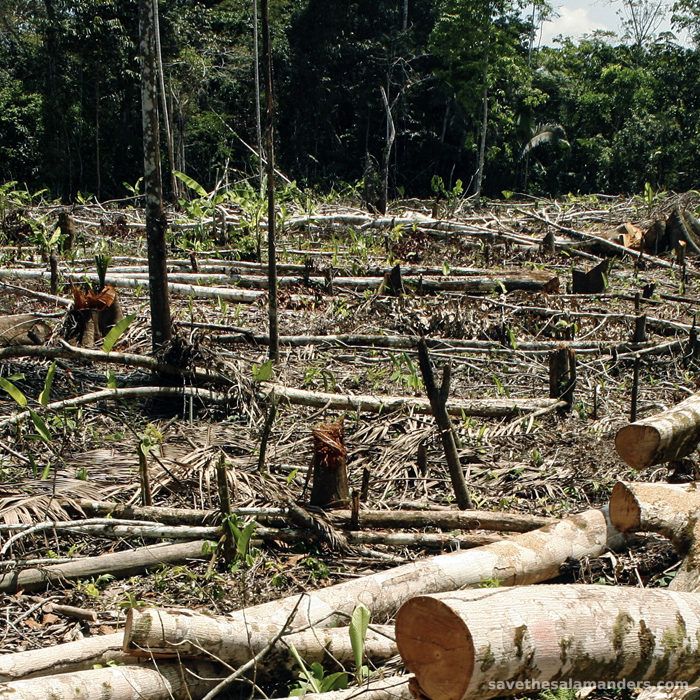
One of the biggest issues affecting salamanders is the loss of their natural habitat. Many areas that were once suitable for salamanders have been converted for agriculture, urban development, mining, and logging. Because many salamander species have very small natural ranges, sometimes limited to a single mountain or valley, the destruction of even a relatively small area of habitat can push an entire species toward extinction.
Salamanders depend on very specific microhabitats. They need moist soil, rotting logs, leaf litter, cool streams, and vernal pools. When forests are fragmented by roads and development, salamander populations become isolated from one another, reducing genetic diversity and making them more vulnerable to local extinction.
Road Mortality
Every year, enormous numbers of salamanders are killed on roads and highways. This is particularly devastating during spring and autumn migration periods when many species move between their breeding ponds and terrestrial habitats. On rainy nights during these migrations, hundreds or even thousands of salamanders may attempt to cross a single stretch of road. In many areas, road mortality is a leading cause of local population declines.
Pollution and Chemical Contamination
Because salamanders breathe through their skin, they are extraordinarily sensitive to pollutants. Pesticides, herbicides, fertilizer runoff, heavy metals, and other chemical contaminants can be absorbed directly through their permeable skin. Road salts used during winter months have been shown to cause severe health problems and death in salamanders. Acid rain has devastated salamander populations in many mountainous regions.
The Pet Trade
Millions of salamanders are captured from the wild or bred in captive facilities for the pet trade each year. This trade has serious consequences for wild populations, particularly for species that are rare or have limited ranges. The trade has also been identified as a major pathway for the spread of deadly diseases like Bsal between continents.
Exploitation for Food and Traditional Medicine
In certain regions, salamanders are collected for food or for use in traditional medicine. The Chinese Giant Salamander, the world's largest amphibian, has been driven to the brink of extinction largely due to overharvesting for consumption. Despite being legally protected, poaching remains a serious problem for this species.
Invasive Species
Non native predators and competitors pose a serious threat to many salamander populations. Introduced fish, particularly trout stocked for recreational fishing, have eliminated salamanders from many streams and ponds where they were once common. Invasive plants can also alter habitat in ways that make it unsuitable for native salamander species.
Learn More
Read about how climate change affects salamanders, the deadly chytrid fungus threatening populations worldwide, and discover what you can do to help. You can also explore what makes salamanders unique and why they matter to our ecosystems.