
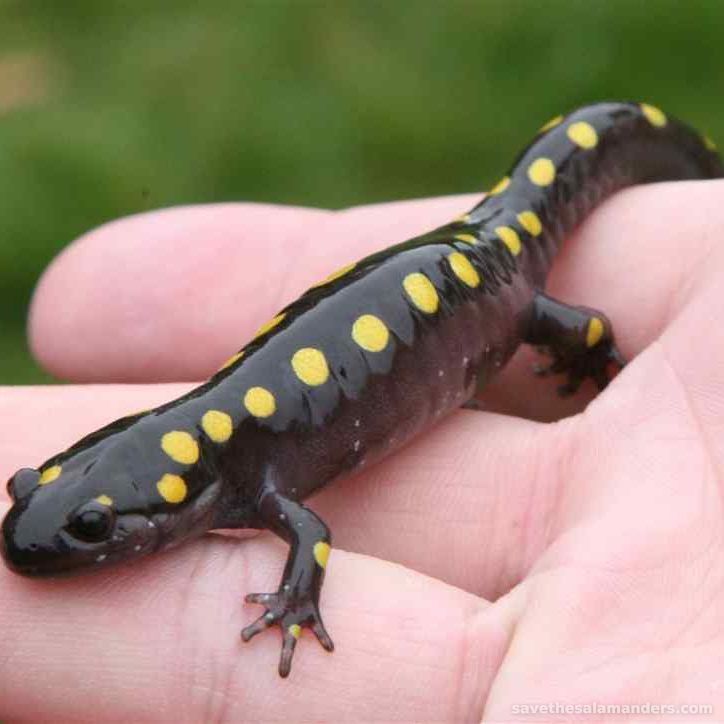
Avoid Handling
Salamanders have very absorbent skin. The salts and oils on human hands can harm them, so please enjoy salamanders by observation only. If you absolutely must handle a salamander, do so gently and briefly, and always wet your hands with clean, chlorine free water first.
Keep Them Wild
Please do not remove salamanders from the wild and keep them as pets. Removing salamanders from their natural habitats causes local populations to decline, and with roughly half of the world's salamander species at risk of extinction, every individual matters.
Help Them Cross
If you see a salamander crossing a road or path, and it is safe to do so, help them cross in the direction they were headed. Many salamanders are killed each year on roads, which contributes to local population declines. During rainy nights in spring and fall, salamander road crossings can involve hundreds of animals at a time. Some communities have organized volunteer crossing guard programs to help salamanders safely navigate busy roads during these migration events.
Stay Chemical Free
When entering forested areas, do not wear DEET bug sprays or sunscreens, as they are very harmful to amphibians. Instead, wear bug jackets, light long sleeve shirts, hats, and sunglasses. Even trace amounts of chemicals on your hands or clothing can be absorbed through a salamander's skin and cause serious harm.
Do Not Support the Tourist Trade
Certain species of salamander are sealed alive and sold as keychains in certain regions. Other species are unethically harvested and used for food. If you see any of these products, do not buy them, as you will be supporting this horrible trade.
Fishing Bait
Do not use salamanders as fishing bait. Salamanders can feel pain, and it is excruciatingly painful to have a hook pushed through them. Instead, use artificial lures that are readily available and equally effective.
Protect Their Habitat
One of the most impactful things you can do is to protect and improve their habitat. If you own land with forests, streams, or wetlands, consider preserving these areas in their natural state. Leave fallen logs, rocks, and leaf litter in place, as these provide essential shelter and hunting grounds for salamanders.
Support Conservation Organizations
Donating to and volunteering with organizations that work to protect salamanders and their habitats is one of the most effective ways to help. Groups like Save The Salamanders, the Amphibian Survival Alliance, and local wildlife conservation groups all do important work. Even small contributions can make a real difference.
Spread the Word
Many people simply do not know that salamanders are in trouble. Sharing information about salamander conservation with friends, family, and on social media helps raise awareness. Education is one of the most powerful tools in conservation.
Learn More
Understand why salamanders matter to the environment and learn about the serious threats they face. If you enjoy observing salamanders in the wild, read our ethical field herping guidelines to make sure you are not accidentally causing harm.