
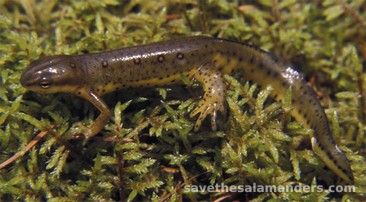
Salamanders in Your Home
In the autumn it is not uncommon for salamanders to move into people's homes, especially their crawl spaces, basements, or around pools. Unfortunately, when entering human dwellings, salamanders may find themselves in areas that are too dry or that contain chlorine. Both conditions can kill them. They may also become trapped with no way to find food or water.
What To Do
The best thing to do is to move them back outside. This may seem concerning during cold fall weather, but salamanders are extremely cold tolerant. Many species spend the winter months underground or beneath logs and rocks, sometimes in temperatures just above freezing. Cold weather is natural for them. Heat and dryness are far more dangerous.
Identifying Your Salamander
If the salamander has a flattened, paddle like tail, it is most likely a newt. If there is a pond or wetland on or near your property, this type of salamander should be placed at its edge. For salamanders with stubby, fat tails, they can be released in forested or woodland areas, ideally the one closest to where they were found. Areas thick with leaf litter and fallen debris are especially good release spots.
How to Handle Them Safely
When moving salamanders, first wet your hands with clean, chlorine free water. Try to cup or scoop the animal up rather than grasping or restraining it. The oils and salts on dry human hands can actually burn a salamander's skin, so wetting your hands first is very important.
If you need to temporarily house a salamander, place it in a container with damp paper towels, a few leaves, and a lid with air holes. Keep the container in a cool area away from direct sunlight. Release the salamander as soon as possible, preferably in the evening.
Find Salamanders in Your Area
Curious about what species of salamander you may have found? Use the tool below to discover which salamanders are native to your region. Simply enter your location and you can browse the species that call your area home.