
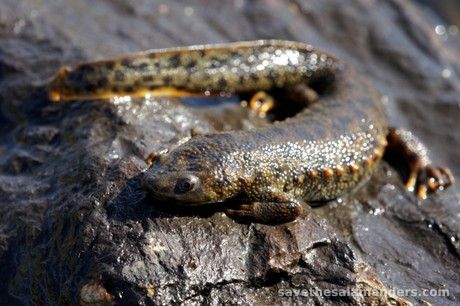
Are Salamanders Poisonous?
Although salamanders appear to be relatively inoffensive creatures, all species are in fact poisonous. It is important to note that there is a very big difference between a poisonous animal and a venomous one. Poisonous animals are toxic or harmful if you eat them or ingest their secretions. Venomous animals inject a toxin directly into their prey or predator through bites or stings.
How Salamanders Produce Toxins
The poisons that salamanders possess are produced in parotoid or granular glands located in their skin. It is believed that salamanders obtain their toxicity by ingesting or acquiring strong bacteria, such as Vibrio species. All salamander species secrete toxins over their skins, which if ingested can be poisonous. Generally speaking, juvenile salamanders are far more toxic than adults. Toxicity also varies between species and can even vary among the same species between different populations.
The Most Toxic Salamander
All the species within the genus Taricha possess tetrodotoxin, one of the most potent toxins known to science. This is the same toxin found in puffer fish and certain species of octopus. Of the Taricha species, the Rough Skinned Newt (Taricha granulosa) is the most toxic. A single adult carries enough tetrodotoxin to kill several adult humans if ingested.
The extreme toxicity of the Rough Skinned Newt is the result of an evolutionary arms race with the Common Garter Snake (Thamnophis sirtalis), which has evolved a remarkable resistance to tetrodotoxin. In areas where the two species coexist, newts are more toxic and garter snakes are more resistant, each driving the other to ever greater extremes in a process that has been unfolding for millions of years.
Venomous Salamanders
Certain salamander species in the genera Pleurodeles and Tylototriton have tubercles running down the sides of their bodies. If these animals are grasped or attacked, they can push their sharp ribs through these tubercles, effectively creating a row of tiny venomous barbs. The ribs pierce through glands in the skin that coat them with toxic secretions. This makes these salamanders some of the only amphibians that could be considered truly venomous.
The Iberian Ribbed Newt (Pleurodeles waltl) is perhaps the best known example. When threatened, it can swing its ribs forward at remarkable speed, piercing through its own skin to present sharp, toxin coated points to any predator foolish enough to grab it.
Staying Safe
For humans, the practical takeaway is simple: never eat a salamander, and always wash your hands thoroughly after handling one. The toxins on their skin can cause irritation if they come into contact with your eyes, mouth, or any open wounds. It is always best to observe salamanders without touching them whenever possible.