As the summer slips away and cooler temperatures move in, most people would assume that the time to observe reptiles and amphibians has past. But Autumn is one of the best times to encounter salamanders, as these amphibians prefer cooler and damper conditions.
At the end of October, I headed out with a few friends to several locations to collect observational records of various salamander species.
The first spot I ventured too was a mixed forest area in Leeds and Grenville County. Here I encountered a Blue-Spotted Salamander
(Ambystoma laterale). Many of these mole salamanders (especially at this particular location) utilize the fossorial habitats underground, so seeing one at the surface is always a treat.
The next habitat I checked was a stream. This area supports a population of Northern Two-lined Salamanders
(Eurycea bislineata). Around half a dozen or so were quickly found.
The last spot of the day was a steep forested ridge next to a large marsh. On the way to the site I saw a hatchling Snapping Turtle
(Chelydra serpentina). He was most likely heading towards the marsh.
When I arrived at the ridge I immediately started seeing salamanders. The most common of which were Eastern Lead-backed Salamanders
(Plethodon cinereus). A Red Eft
(Notophthalmus viridescens) and Yellow-Spotted Salamander
(Ambystoma maculatum) were also seen. This was the first observation of a mole salamander at this location, as such I was extremely happy to see this animal!
The salamanders weren’t the only ones using the ridge as a small Dekay’s Brown Snake
(Storeria dekayi) was seen here as well. The docile snake was trying to enjoy the last warmish days before heading below the frostline.
In all, 30 salamanders comprising 5 species were seen in just a single day!
[caption id="attachment_444" align="aligncenter" width="300"]
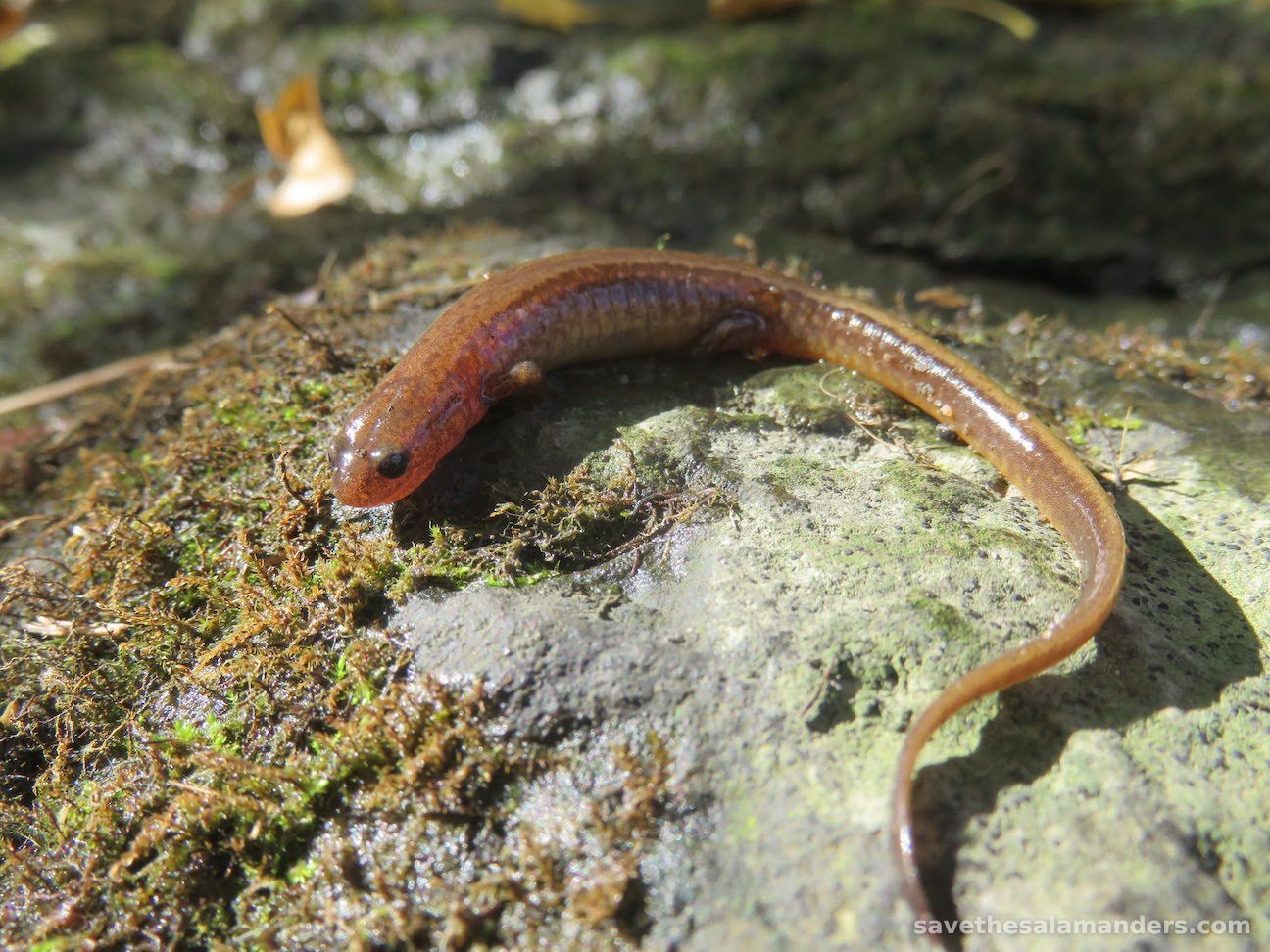
Northern Two-lined Salamanders
(Eurycea bislineata)[/caption]
[caption id="attachment_445" align="aligncenter" width="225"]
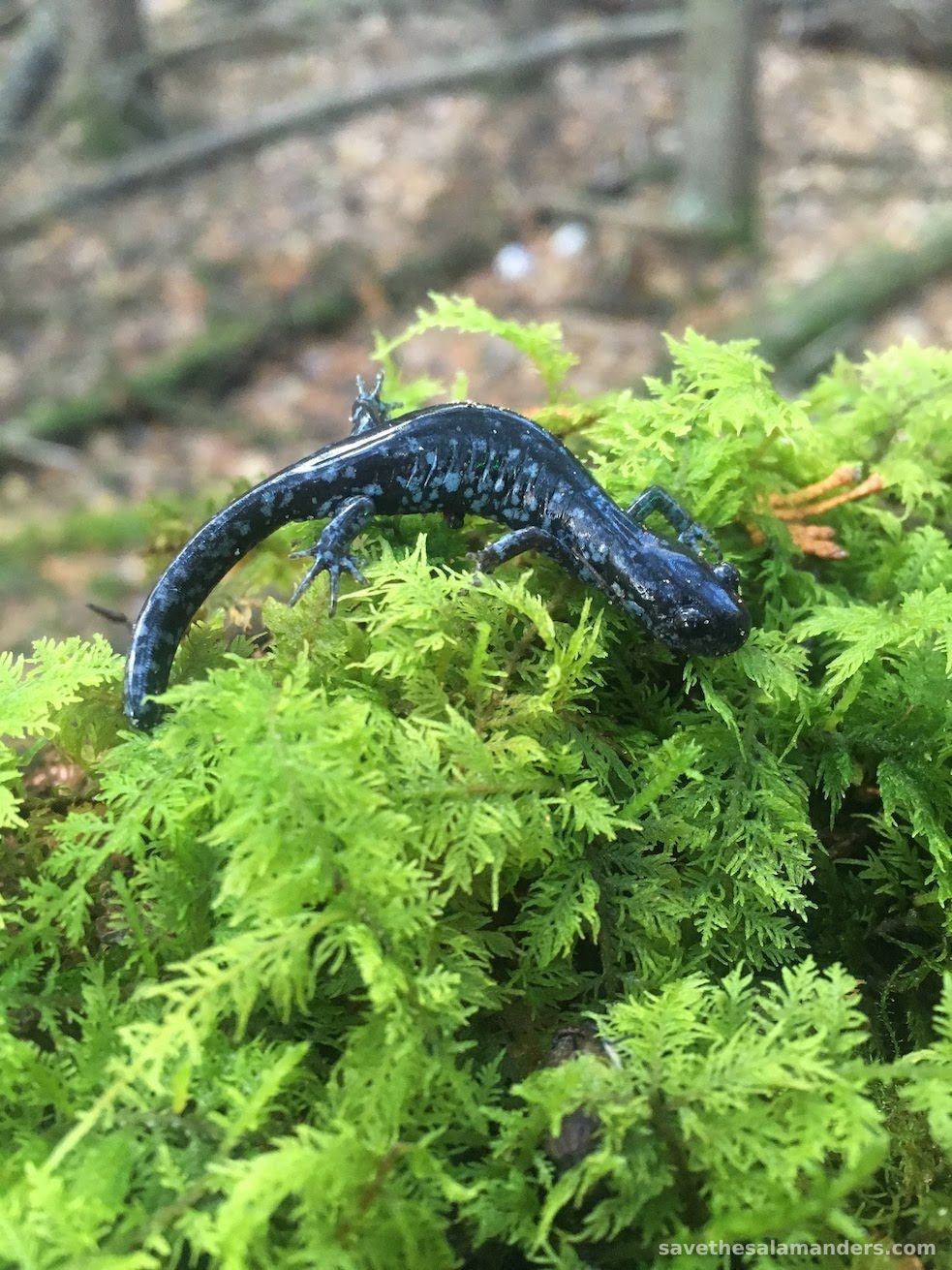
Blue-Spotted Salamander
(Ambystoma laterale)[/caption]
[caption id="attachment_446" align="aligncenter" width="300"]
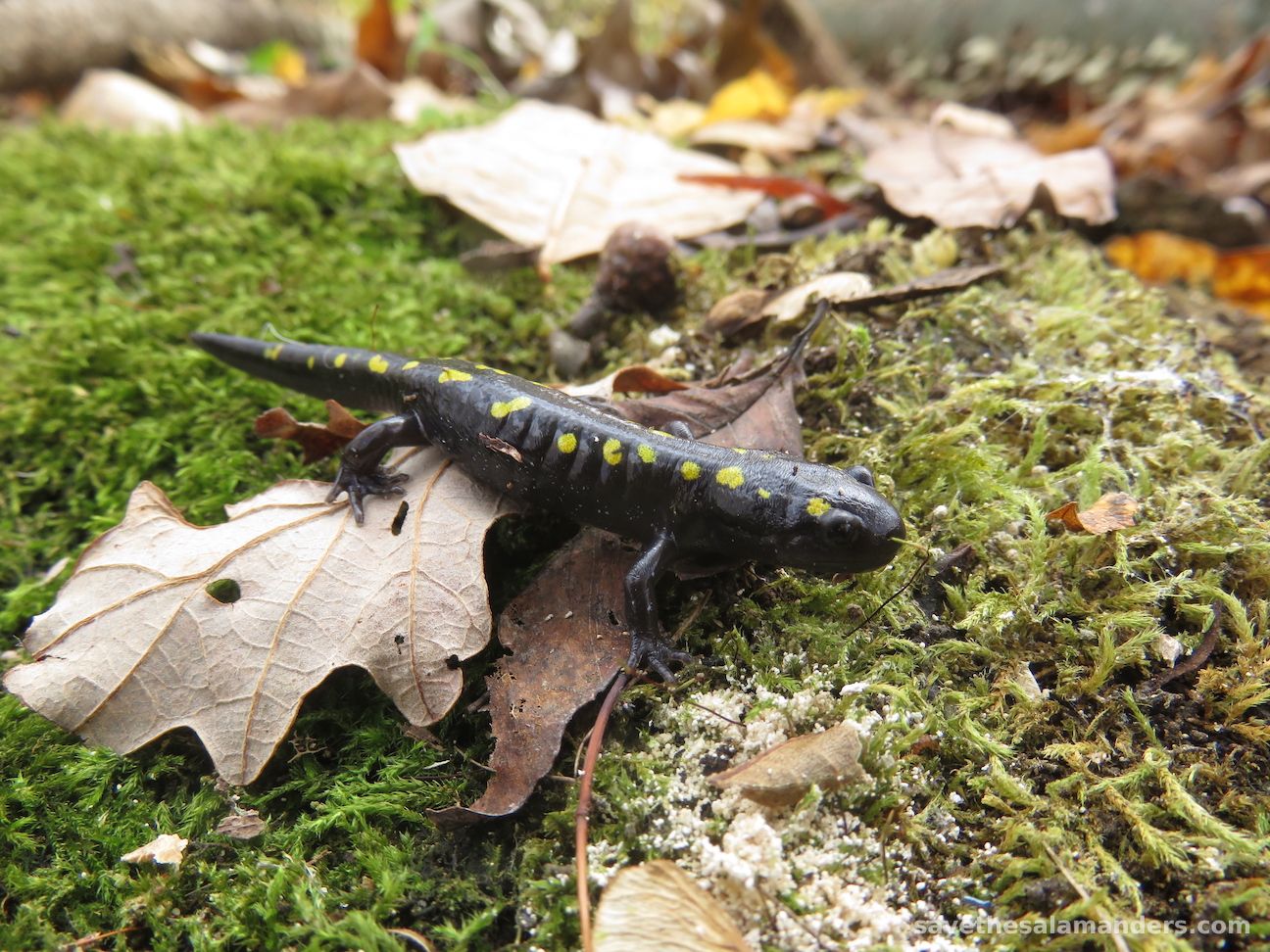
Yellow-Spotted Salamander
(Ambystoma maculatum)[/caption]
[caption id="attachment_447" align="aligncenter" width="300"]
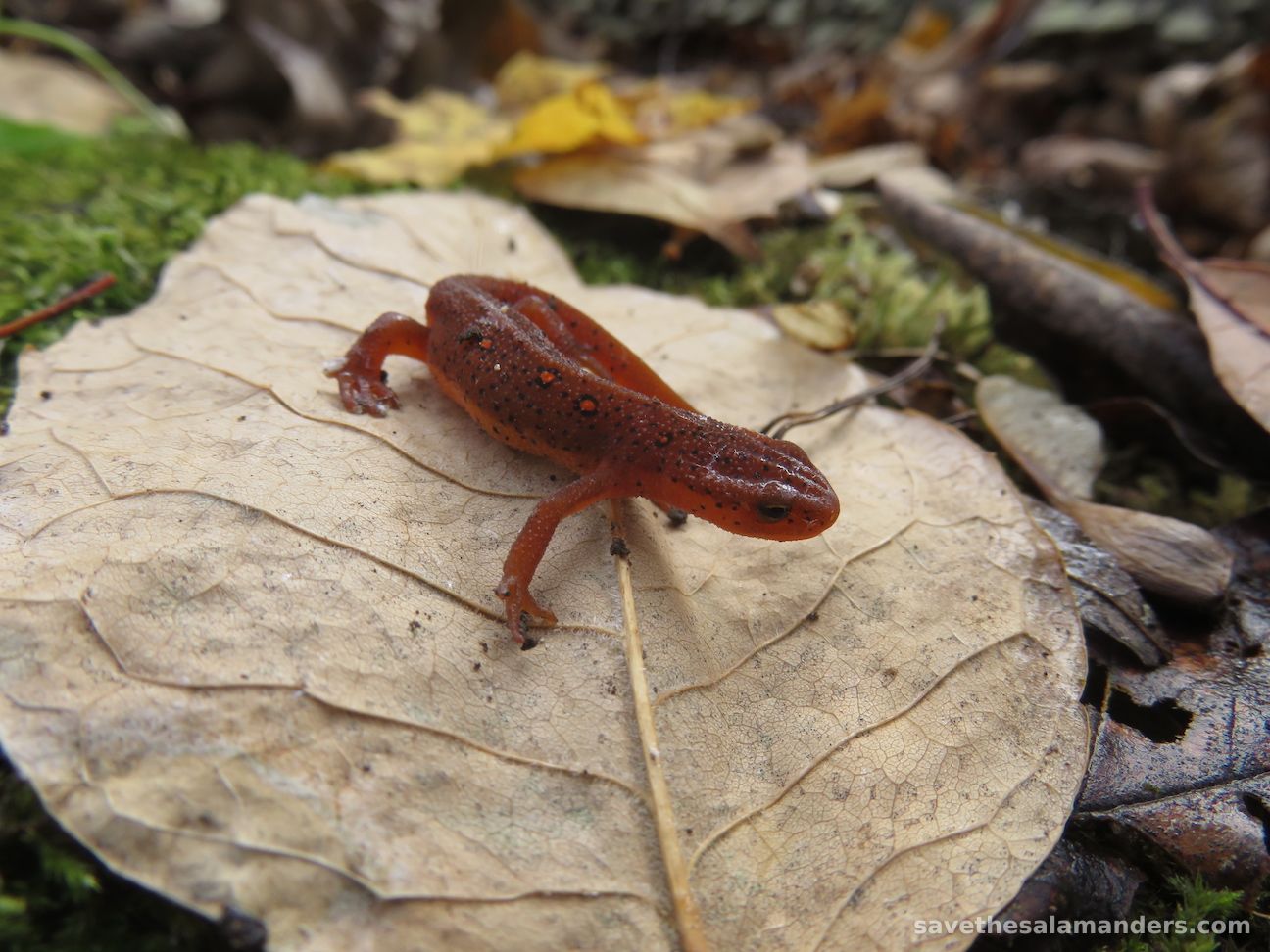
Red Eft
(Notophthalmus viridescens)[/caption]
[caption id="attachment_448" align="aligncenter" width="300"]
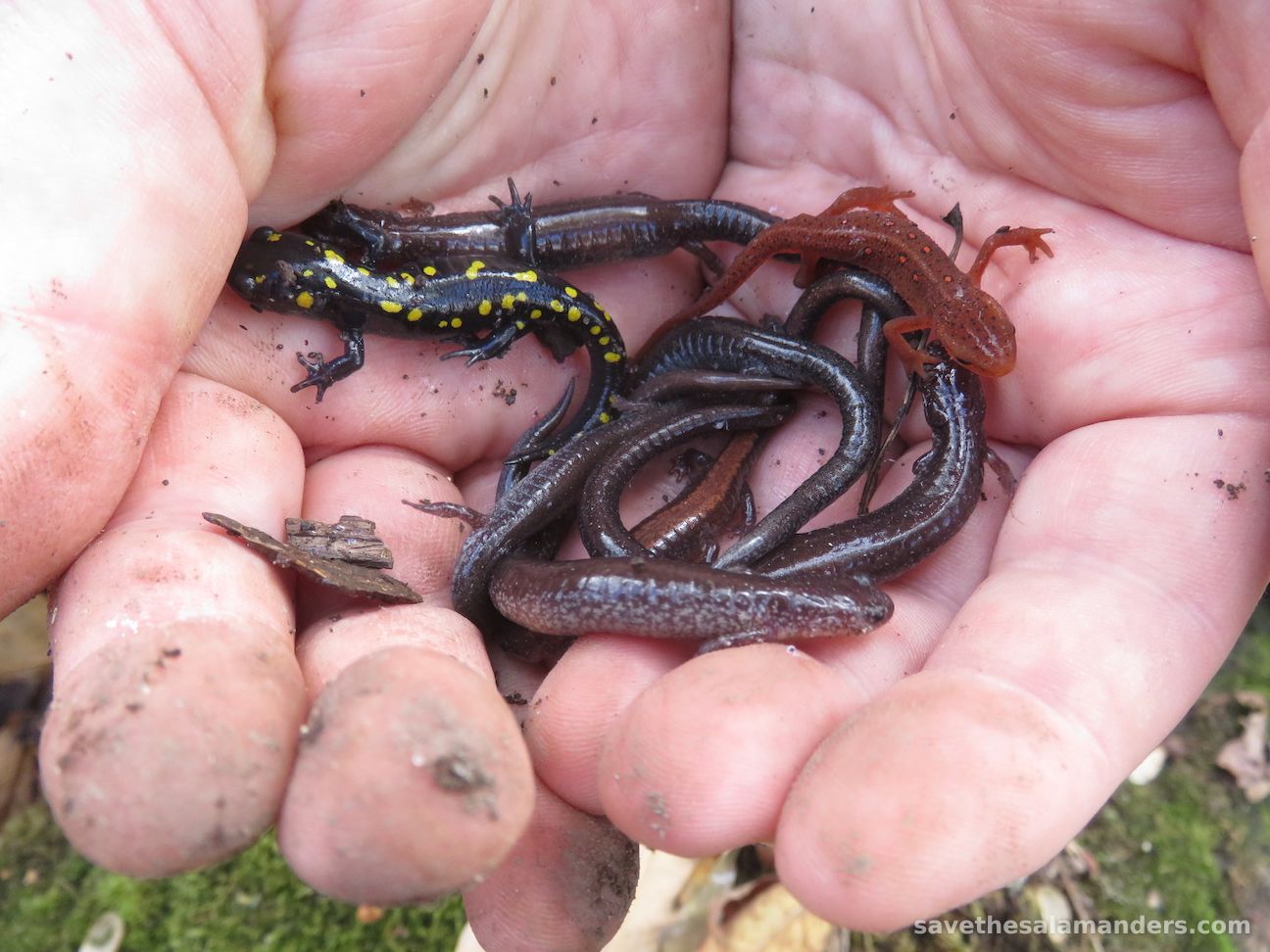
3 Species of Salamanders[/caption]
[caption id="attachment_449" align="aligncenter" width="300"]
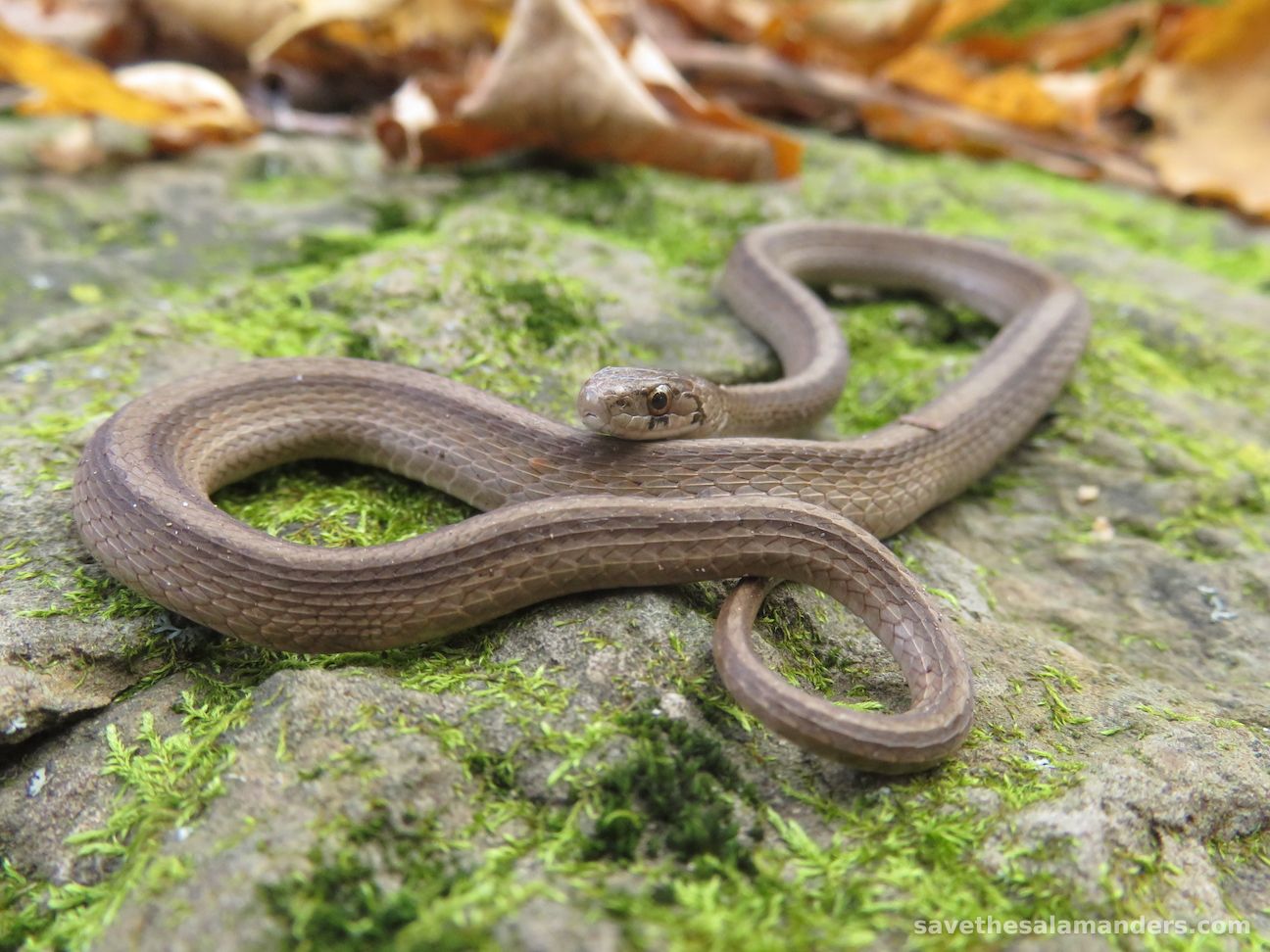
Dekay’s Brown Snake
(Storeria dekayi)[/caption]
Written by: Noah Alexander - Save The Salamanders